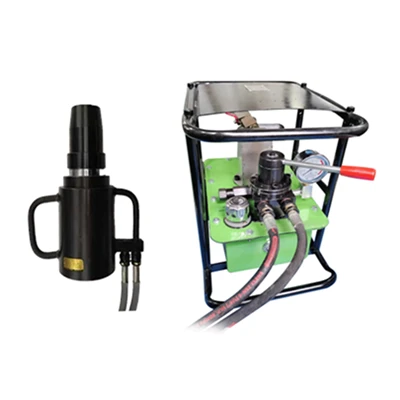
Hey there! As a supplier of Mining Anchor Cable Cutters, I've seen firsthand how the blade design can have a huge impact on the cutting ability of these powerful tools. In this blog post, I'm gonna break down the key aspects of blade design and explain how they affect the performance of a Mining Anchor Cable Cutter.
Let's start with the basics. The blade of a Mining Anchor Cable Cutter is the heart of the tool. It's what actually does the cutting, so its design is crucial. One of the most important factors in blade design is the material. The blade needs to be made of a strong, durable material that can withstand the high forces involved in cutting anchor cables. Common materials for blades include high - carbon steel, alloy steel, and tungsten carbide.
High - carbon steel is a popular choice because it's relatively inexpensive and easy to work with. It has good hardness and wear resistance, which means it can hold an edge for a decent amount of time. However, it may not be as tough as some other materials, especially when dealing with very thick or tough anchor cables.
Alloy steel, on the other hand, is a step up in terms of performance. It combines the properties of different metals to create a material that's stronger, more durable, and more resistant to wear and corrosion. Alloy steel blades can handle higher cutting forces and are better suited for heavy - duty applications.
Tungsten carbide is the top - of - the - line material for blade design. It's extremely hard and wear - resistant, making it ideal for cutting through the toughest anchor cables. Tungsten carbide blades can maintain their sharpness for a long time, even under extreme conditions. But they're also more expensive than the other two materials, so they may not be the best choice for every application.
Another important aspect of blade design is the shape. The shape of the blade can affect how it cuts through the anchor cable. There are several common blade shapes used in Mining Anchor Cable Cutters, such as straight blades, curved blades, and serrated blades.
Straight blades are the simplest and most common type. They're easy to manufacture and can provide a clean, straight cut. However, they may require more force to cut through the cable, especially if the cable is thick or has a high tensile strength.
Curved blades are designed to follow the contour of the anchor cable, which can make the cutting process more efficient. They can reduce the amount of force needed to cut through the cable and can also help prevent the cable from slipping during the cutting process.
Serrated blades have a series of teeth along the cutting edge. These teeth can grip the cable and make it easier to cut through. Serrated blades are particularly effective for cutting through cables with a rough or uneven surface.
The size of the blade also matters. A larger blade can cover more area and cut through thicker cables, but it may also be heavier and more difficult to handle. A smaller blade, on the other hand, is more maneuverable but may not be able to handle as thick of a cable. It's important to choose the right blade size based on the specific application.
Now, let's talk about how these blade design factors translate into real - world cutting ability. A well - designed blade can make the cutting process faster, easier, and more efficient. For example, a blade made of high - quality material with the right shape and size can cut through an anchor cable with less force, which means less wear and tear on the cutter and less fatigue for the operator.
On the other hand, a poorly designed blade can lead to a number of problems. It may require more force to cut through the cable, which can cause the cutter to overheat and wear out more quickly. It may also result in a rough or uneven cut, which can affect the integrity of the anchor cable.
In addition to the blade design, there are other factors that can affect the cutting ability of a Mining Anchor Cable Cutter. For example, the hydraulic system of the cutter plays a crucial role. A powerful hydraulic system can provide the necessary force to drive the blade through the cable. The quality of the cutter's construction and the maintenance of the tool also have an impact on its performance.


If you're in the market for a Mining Anchor Cable Cutter, it's important to consider all of these factors. Look for a cutter with a well - designed blade made of high - quality material. Pay attention to the shape and size of the blade, as well as the overall construction and performance of the cutter.
And if you're interested in other types of breaching and cutting equipment, we also offer some great options. Check out our Hydraulic Rock Splitting Gun, Electric Rock Splitter, and Nut Cutter. These tools are designed to meet the needs of various mining and construction applications.
If you have any questions about our Mining Anchor Cable Cutters or other products, or if you're interested in a purchase, don't hesitate to reach out. We're here to help you find the right tool for your job and ensure that you get the best performance possible.
References:
- "Materials Science for Engineers" - A textbook that covers the properties and applications of different materials used in tool manufacturing.
- "Cutting Tool Technology" - A resource that provides in - depth information on the design and performance of cutting tools.