As a supplier of Anchor Cable Grouting Connectors, I often get asked about the best grouting materials for these connectors. It's a crucial question because the right grouting material can significantly affect the performance and longevity of the anchor cable system. In this blog, I'll share some insights on what kind of grouting materials are suitable for an Anchor Cable Grouting Connector.
Understanding the Role of Grouting in Anchor Cable Systems
Before diving into the specific grouting materials, let's quickly understand why grouting is so important in anchor cable systems. The main purpose of grouting is to fill the space between the anchor cable and the borehole, providing a bond that transfers the load from the cable to the surrounding rock or soil. This bond is essential for the stability and safety of the structure.
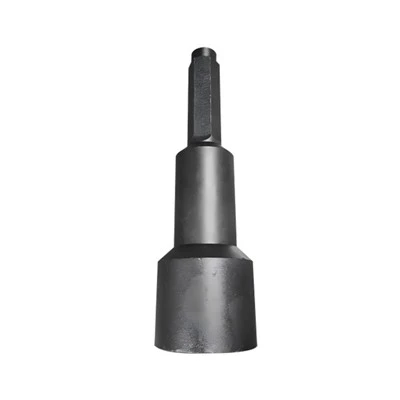
The Anchor Cable Grouting Connector plays a key role in this process. It ensures that the grouting material is evenly distributed around the cable, creating a strong and uniform bond. You can learn more about our Anchor Cable Grouting Connector on our website.
Types of Grouting Materials
There are several types of grouting materials available, each with its own advantages and disadvantages. Let's take a look at some of the most common ones.
Cementitious Grouts
Cementitious grouts are one of the most widely used grouting materials for anchor cable systems. They are made from a mixture of cement, water, and sometimes additives. Cementitious grouts offer several benefits:
- Strength: They can develop high compressive strength over time, providing a strong bond between the cable and the surrounding medium.
- Durability: Cementitious grouts are resistant to environmental factors such as water, chemicals, and temperature changes, ensuring long - term stability.
- Cost - effectiveness: They are relatively inexpensive compared to some other grouting materials, making them a popular choice for many projects.
However, cementitious grouts also have some limitations. They can take a relatively long time to cure, which may delay the construction process. Additionally, they may shrink during the curing process, which could potentially affect the bond strength.
Epoxy Grouts
Epoxy grouts are another option for anchor cable grouting. These grouts are made from a two - component epoxy resin system that cures to form a strong, durable bond. Epoxy grouts have several advantages:
- Fast curing: They can cure much faster than cementitious grouts, allowing for quicker construction progress.
- High bond strength: Epoxy grouts offer excellent adhesion to both the cable and the surrounding rock or soil, providing a very strong bond.
- Chemical resistance: They are highly resistant to chemicals, making them suitable for use in aggressive environments.
On the downside, epoxy grouts are generally more expensive than cementitious grouts. They also require careful handling and mixing to ensure proper curing, and they may be sensitive to temperature and humidity during the curing process.
Resin Grouts
Resin grouts are similar to epoxy grouts in that they are based on a resin system. However, they can have different formulations and properties. Resin grouts are often used in applications where high strength and fast curing are required.
- High strength: Resin grouts can provide very high compressive and tensile strength, making them suitable for heavy - load applications.
- Fast installation: They can cure quickly, allowing for rapid construction.
- Good adhesion: Resin grouts adhere well to various surfaces, ensuring a reliable bond.
But like epoxy grouts, resin grouts can be costly, and they need to be handled carefully to avoid problems during the curing process.
Factors to Consider When Choosing Grouting Materials
When selecting the grouting material for an Anchor Cable Grouting Connector, several factors should be taken into account:


Load Requirements
The load that the anchor cable system will need to support is a crucial factor. For light - load applications, a cementitious grout may be sufficient. However, for heavy - load applications, epoxy or resin grouts may be a better choice due to their higher strength.
Environmental Conditions
The environmental conditions at the project site can also influence the choice of grouting material. If the site is exposed to water, chemicals, or extreme temperatures, a grout with good resistance to these factors, such as epoxy or resin grout, should be considered.
Curing Time
The available time for construction is another important consideration. If the project has a tight schedule, a fast - curing grout like epoxy or resin may be necessary. On the other hand, if there is more time available, a cementitious grout can be used.
Cost
Cost is always a factor in any construction project. Cementitious grouts are generally the most cost - effective option, while epoxy and resin grouts are more expensive. However, the cost should be balanced against the performance and durability requirements of the project.
Compatibility with the Anchor Cable Grouting Connector
It's also important to ensure that the chosen grouting material is compatible with the Anchor Cable Grouting Connector. The connector should be able to handle the viscosity and flow characteristics of the grout to ensure proper distribution. Our Anchor Cable Grouting Connector is designed to work well with a variety of grouting materials, but it's still a good idea to consult with our technical team to make sure you're making the right choice.
Another Related Product: Rock Bolt Mixing Connector
In addition to the Anchor Cable Grouting Connector, we also offer the Rock Bolt Mixing Connector. This product is used in rock bolt systems and is designed to ensure proper mixing of the grouting material. It's an important part of the overall rock reinforcement system, and it can work in tandem with the Anchor Cable Grouting Connector in some projects.
Conclusion
Choosing the right grouting material for an Anchor Cable Grouting Connector is a critical decision that can impact the performance and safety of the anchor cable system. Cementitious grouts are a popular choice for their cost - effectiveness and strength, while epoxy and resin grouts offer faster curing and higher strength in more demanding applications. When making your decision, consider factors such as load requirements, environmental conditions, curing time, and cost.
If you're in the market for an Anchor Cable Grouting Connector or have questions about the suitable grouting materials, don't hesitate to reach out. We're here to help you make the best choice for your project.
References
- American Concrete Institute (ACI). "Guide to Grouting Post - Tensioned Structures."
- International Association for Bridge and Structural Engineering (IABSE). "Grouting in Civil Engineering."